
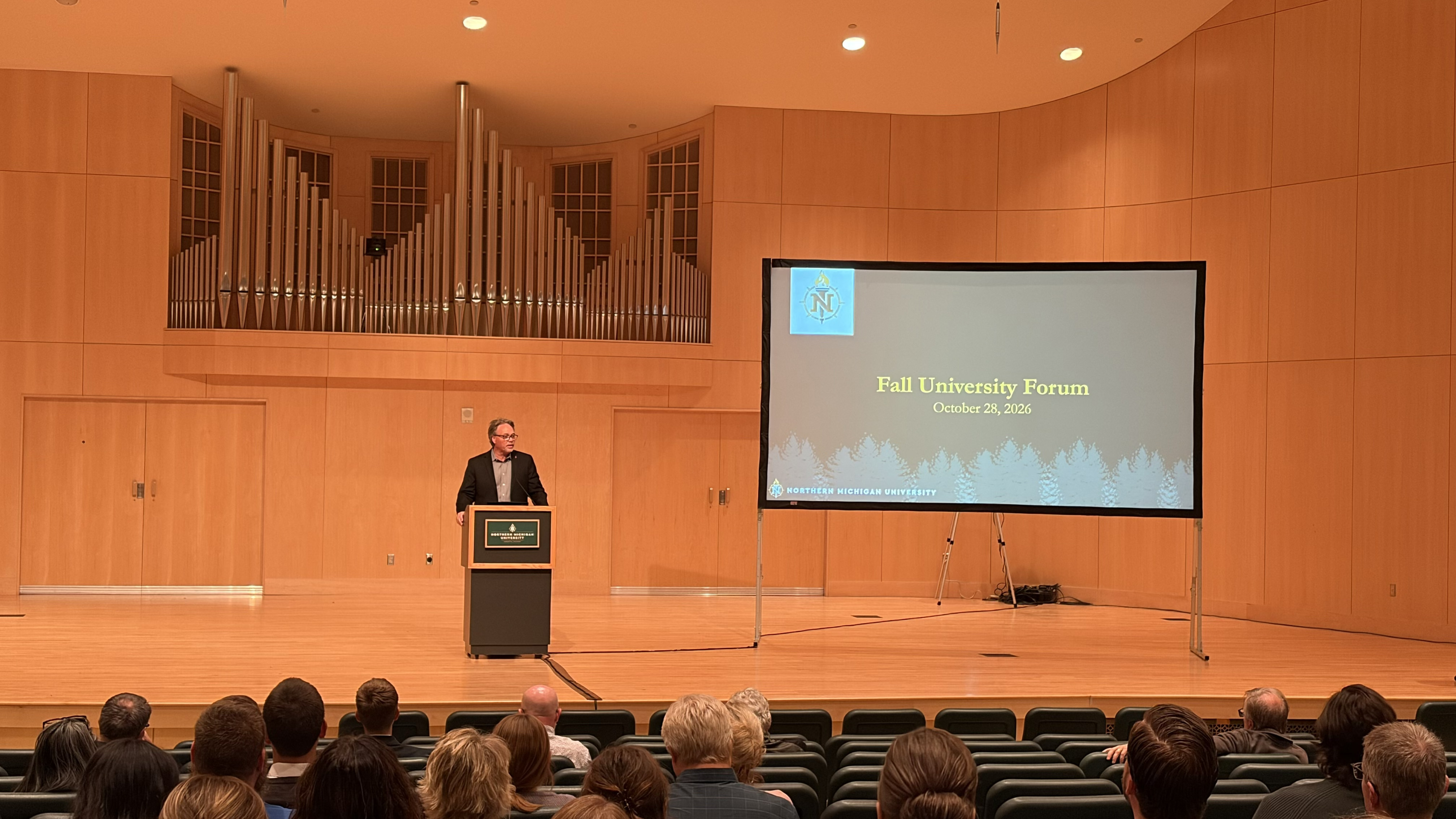
In an Oct. 28 fall university forum that covered a variety of topics, one overall theme emerged: change will be necessary to ensure NMU doesn’t just survive, but thrive, as administrators look to navigate declining enrollment, relatively flat state appropriations and increased competition for students from community colleges and Michigan flagship universities.
“We read every day about all of these schools making desperate choices at the last minute because they didn't plan for enrollment declines, they didn’t adjust their staffing footprint, they didn’t look at their physical plan. We don’t have to do that right now,” said NMU President Chris Olsen. “We’re in a place of relative financial stability and strength, and we have all of these advantages, if we have the courage to be innovative, to act, right now.”
Some of those advantages were highlighted by the Higher Learning Commission’s accreditation visit this month, in which university faculty, staff and students spoke with HLC representatives about their campus experience. Olsen said the commission was impressed with what they heard.
“They couldn't stop talking about how much we had done for students and student success,” Olsen said, adding they frequently mentioned that “people are just so happy to be here.”
Following Olsen’s remarks, Rob Winn, interim provost and vice president for Academic Affairs, discussed Wildcat Welcome, an initiative to support new, first-time freshmen and transfer students during their first four weeks on campus. The initiative included attendance assessments during the first two weeks of the semester, with subsequent outreach to students who missed class. It also included “Wildcat Check-in” surveys to see how students felt they were faring.
Winn also discussed changes to the Honors program, including a simpler admissions process and increased course options to accommodate the program’s rising enrollment. Lastly, he highlighted an administrative restructuring to occur at the end of the calendar year, which will place the College of Graduate Studies and Research, and Library and Instructional Services together, to be led by Susy Ziegler as dean.
Rhea Dever, vice president for People, Culture and Wellbeing, discussed personnel changes within her department as retirements related to the university’s buyout program sparked a review of the department’s operations. She also emphasized making work related to the Okanagan Charter more visible with an “Okanagan in Action” badge, highlighted several third party recognitions earned by NMU this year and focused on a number of university initiatives meant to improve wellbeing for students, faculty and staff.
“This good work is happening on campus all the time, in all sorts of spaces,” she said.
Jeff Korpi, associate vice president for Northern Student Experience, discussed enrollment initiatives as NMU sees a 5% decrease in students this academic year. Initiatives include direct admit agreements with community colleges, distinguishing NMU’s Honors program by adding coursework and residential experiences specifically for Honors students, strengthening regional and national recruitment efforts, highlighting the availability of Tuition Incentive Program funding for eligible students and deepening partnerships with Upper Peninsula high schools to expand NMU’s visibility in schools throughout the U.P.
“We’re so well-equipped in what we offer,” Korpi said. “We have what the U.P. needs to survive into the next generation, and we need to get that message out there.”
Gavin Leach, NMU executive vice president for Finance and Administration, laid out plans for capital projects, providing updates on renovations to Harden Hall, construction of new on-campus apartments along Presque Isle Avenue, beginning of construction for a new College of Business and future plans to create arts and athletics districts on campus.
Leach also addressed budgetary concerns related to declining enrollment and flat state appropriations, outlining the flexible nature of budgeting as even small swings in enrollment either way can create significant financial disruptions.
“The biggest factors you're going to have are state appropriation and enrollment,” Leach said. “These are the two things that can make all these numbers look better.”
Olsen also commented on budgetary concerns, citing relatively flat state appropriations over nearly three decades as a significant factor.
“Think about what your family income was 27 years ago, and if you are trying to survive on the same income, given inflation, you wouldn’t do very well,” he said.
Olsen closed the forum with a positive outlook for the university, calling many of the challenges faced by regional comprehensive universities opportunities for change.
“I’m certainly ecstatic to be here, and I’m looking forward to all the great things we can do,” Olsen said.