
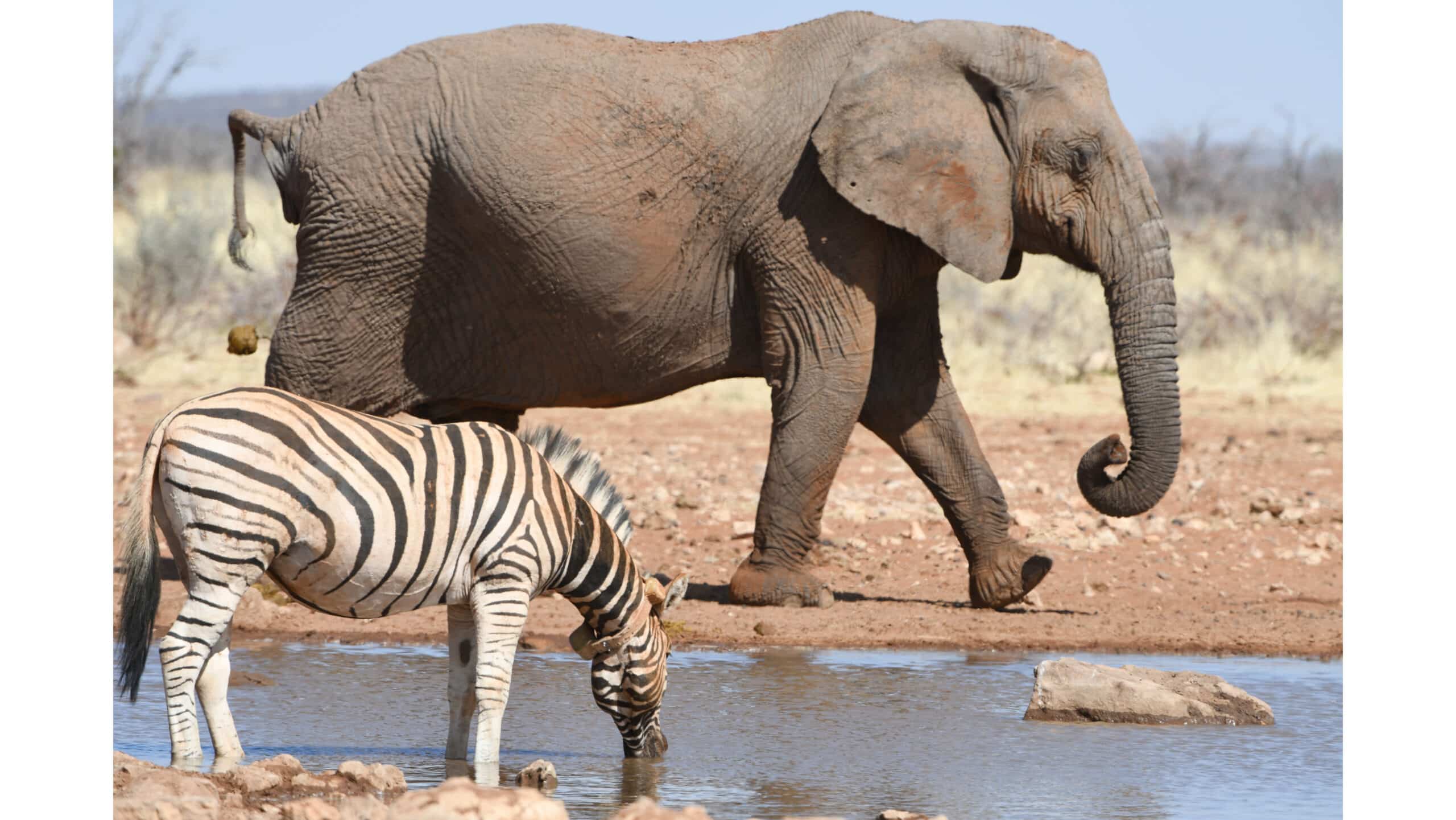
Rylee Jensen, a 2024 master's graduate of Northern Michigan University, and NMU Professor Diana Lafferty recently coauthored a journal article on a study of wild African herbivores. Collaborating with other researchers, they determined that environmental conditions, beyond strictly diet and anatomy, can influence the evolution of gut microbes that play a critical role in animal health and well-being.
Additional co-authors of the study include James Beasley and Madeline Melton of the University of Georgia, Erin McKenney of North Carolina State University (NCSU), and Claudine Cloete of Etosha Ecological Institute.
According to an NCSU press release, as species evolve and diverge from each other, their gut microbiomes also diverge in a predictable way. This concept is known as phylosymbiosis. But studies have determined that this is not always the case, and it's not clear why.
Researchers collected fresh feces samples from 11 herbivore species in Namibia's Etosha National Park, a relatively dry ecosystem. The species included African elephants, Angolan giraffes, wildebeests, two species of zebra and a variety of antelope species.
The study was focused on determining whether there was evidence of phylosymbiosis among herbivore species in an arid ecosystem, and identifying any factors that may play a role in fostering or inhibiting it.
Jensen said researchers did not find any evidence of phylosymbiosis across the greater herbivore community in Enosha National Park, but they did find phylosymbiosis was detected among five of the species that have one thing in common: they were all part of the bovid biological family.
“The five species exhibiting phylosymbiosis are also the five species that are most closely related in an evolutionary context, so it makes sense that we would see phylosymbiosis there,” Jensen said. “However, previous work done in more temperate African ecosystems did not find evidence of phylosymbiosis among bovid species. This suggests the actual environment itself may be playing a role in masking or revealing phylosymbiosis in the gut microbiome.”
The coauthored study was published in BMC Ecology and Evolution. For more information, view the full NCSU press release here.