Maris Cinelli, assistant professor of chemistry at Northern Michigan University, is leading important research to identify new plant-derived compounds that could combat antibiotic-resistant bacteria. She received NMU's Peter White Scholar Award for the current academic year to support the effort. Cinelli describes the award as a great honor, but is quick to credit the talent and dedication of the student researchers in her lab.
Antibiotic resistance has become a growing global concern as bacteria evolve to withstand existing treatments. The overuse and over-prescription of antibiotics, along with their widespread use in agriculture, have accelerated the problem, Cinelli explained.
“There's a huge concern because we're seeing a lot more illnesses and deaths related to antibiotic resistance,” she said. “We need new drugs to treat these problems. We are looking to nature for potential solutions because about two-thirds of all approved drugs are either derived from or inspired by natural products. My lab is trying to discover new, biologically active molecules in medicinal plants, particularly species of plants and fungi that have been used for generations in traditional healing practices. Synthetic medicine is a relatively recent development.”
Cinelli describes her lab as a group of “alkaloid hunters” who study nitrogen-containing metabolites found in plants. A range of drugs are alkaloids, from recreational substances such as cocaine to morphine, nicotine and caffeine.
“We look for them in plants, many of which are nightshades,” she said. “Throughout history, just about every culture in the world has used nightshades for medicinal, cultural or religious purposes. But it's a very big class of plants. Some are food, some are medicinal and some are poisonous. We love studying the poisonous ones because there's a very fine line between what kills you and what cures you, depending on the dose and combination. The latter could lead to the development of new antibiotics.”
Her team's work has already made waves. Graduate student Ishani Sharma discovered the first new alkaloids in hemp in nearly 50 years, presented her findings at a conference last fall, and is getting involved with the cannabis chemistry subdivision of the American Chemical Society.
Former McNair Scholar and recent graduate Sabrina Mata kickstarted the lab's research project after visiting extended family in Mexico. When relatives told her about a nightshade plant traditionally used to treat skin infections, Mata brought some of its seeds back to campus to grow and study in Cinelli's lab. Early testing showed that extracts from the leaves and other parts of the plant were effective at killing a common skin bacterium that can develop antibiotic resistance.
The Peter White funding will help Cinelli and her students determine which specific compounds are responsible for that activity, whether they represent known molecules or potentially new antibiotics, and whether related plant species show similar effects. The team will also test whether the compounds are effective against other dangerous bacteria. She said once the molecular structure is determined, scientists can develop ways to modify it and make it more active.
“The use of nature for medicinal purposes is a defining feature of humanity,” Cinelli said. “There are hundreds of thousands of species of plants on Earth. As I've told my class, at the start of the 21st century, roughly 15-20% of them are phytochemically characterized, meaning we know what's in them. And only about 6% of all plants are pharmacologically categorized.
“Also, the chemistry of plants changes during their life cycle. With some nightshades, the chemical profile looks different at 24 hours post-sprouting than at 24 days. And the fruits contain a different chemicals than the roots. So it's really a complex field. But until we do these experiments, we don't know what's in plants chemically that could combat antibiotic resistance. There's a lot of untapped potential out there with all of the different species.”
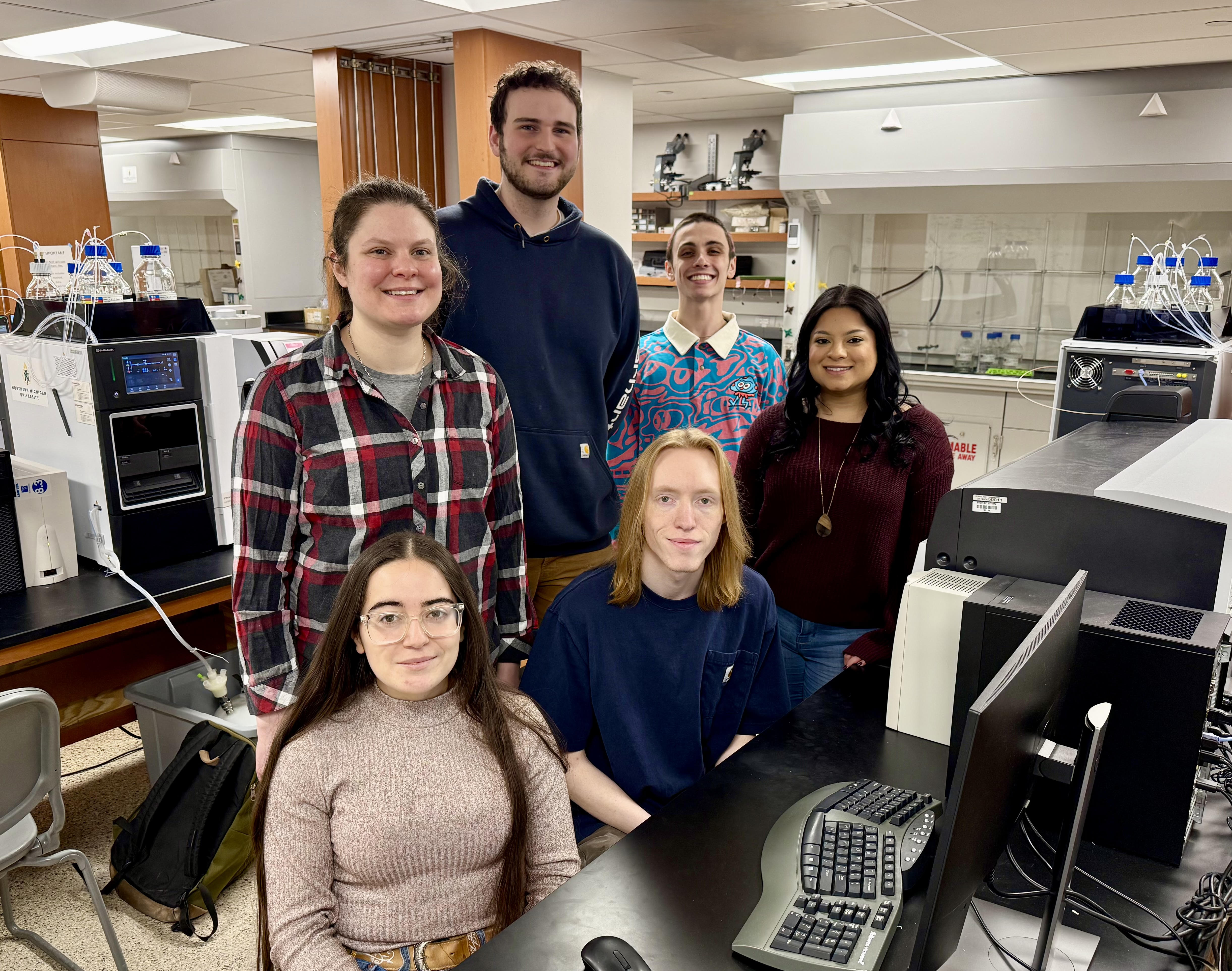
In addition to Sharma and Mata, the other students in Cinelli's research group are senior Joey Diviny, junior Ian Grochowski, and graduate student Tyler Watson. Cinelli speaks with obvious pride about their contributions and the collaborative nature of the work.
“I'm very lucky, and I'm very grateful for my students,” she said. “They bring perspectives and experiences that I don't have, and they come up with ideas I never would have thought of on my own. Faculty-student collaboration is incredibly powerful and, honestly, underrated.”
That appreciation for students is rooted in Cinelli's own path into science, which began at Northern. She earned her bachelor's degree in biology with a chemistry emphasis.
“I didn't know a thing about chemistry before college,” she said. “I've always loved science—plants, bugs, fossils, being in the woods—but I didn't realize I wanted to be a chemist until I was at NMU.”
After graduating in 2006, Cinelli earned a doctorate in medicinal chemistry from Purdue University and completed postdoctoral work at Northwestern University as a National Institutes of Health fellow.
She later worked at Michigan State University, where she expanded her expertise in analytical chemistry and mass spectrometry while collaborating with other plant scientists. In 2021, drawn by NMU's growing focus on medicinal plant chemistry and its new analytical facilities, she returned to her alma mater as a faculty member.