Northern Michigan University has become an affiliate of the Bee Campus USA program, which provides a framework for campus communities to work together to conserve native pollinators by increasing the abundance of native plants, providing nest sites and reducing the use of pesticides.
“Our students, faculty, administrators and staff have long been the most stalwart champions for sustainable environmental practices,” said Jes Thompson, NMU assistant vice president for Sustainability and director of the Sustainability Hub for Innovation and the Environment (SHINE). “This provides dozens of opportunities for student research and service-learning. Already faculty, staff and students have worked together to study and create pollinator habitat with native plants. After our recent audit of course offerings, we know that dozens of NMU faculty include discussions about pollinators and ecosystem health and diversity in their syllabi.”
Prior to becoming a Bee Campus USA affiliate, NMU had made efforts to enhance pollinator conservation. A Native Plant Park established and maintained by the Earth, Environmental and Geographical Sciences Department serves as a microcosm of the Northwoods. It includes native pines, oaks and wildflowers that support pollinators and preserve local biodiversity.
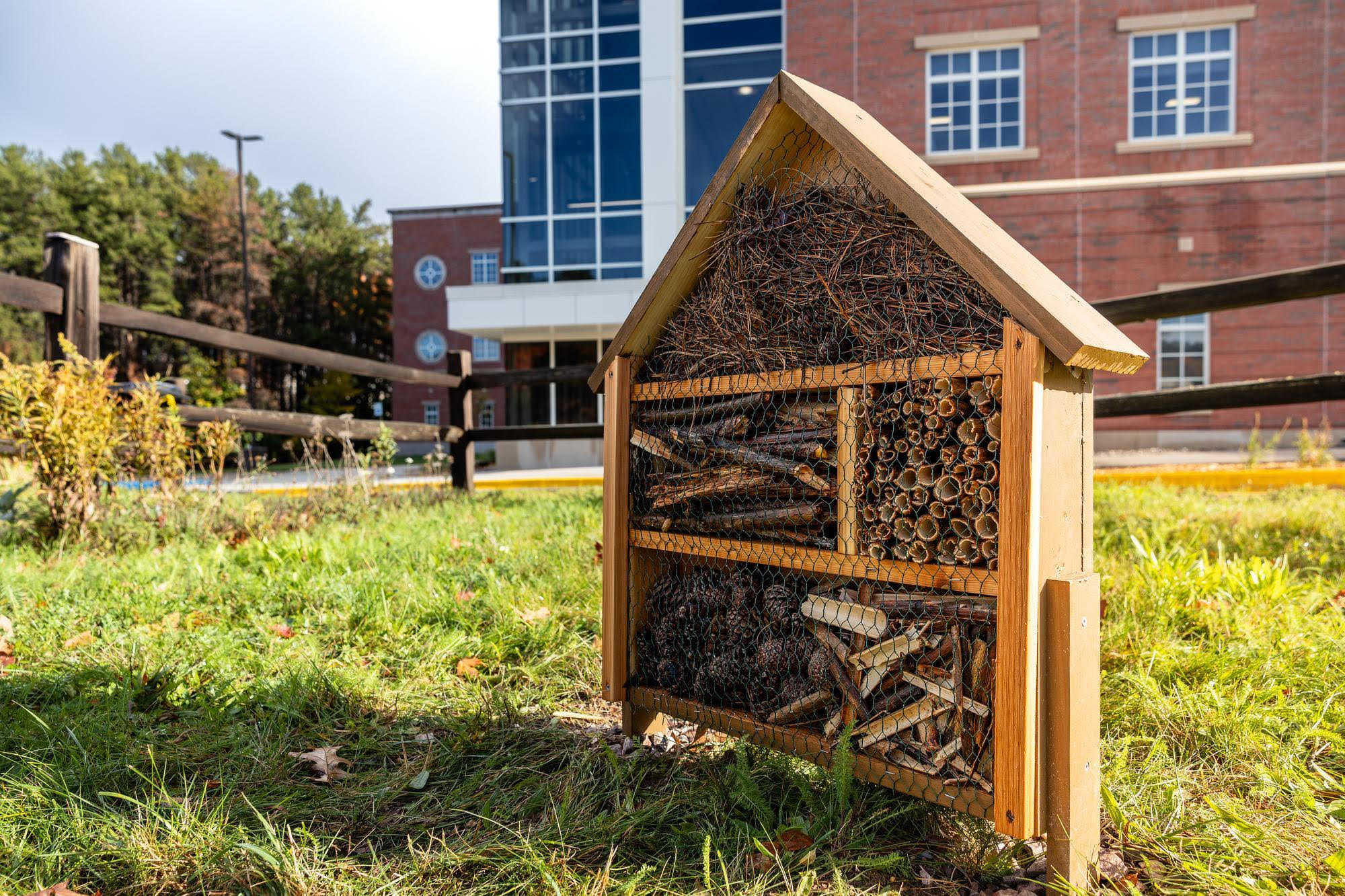
A Campus Nursery, revitalized during Northern's 125th anniversary year in 2024 and located behind the NMU Police Department, is dedicated to native plants. Thompson said 165 shrubs and 33 trees will soon be used in landscaping projects. There are also pollinator “overwintering hotels” scattered across campus, including within the Outdoor Learning Area.
“Students come to NMU for the beautiful environment that Michigan's Upper Peninsula provides,” said Ashlyn Albert, native plant intern for SHINE. “As students, we are proud to call NMU home and I'm excited that joining Bee Campus USA will give us resources that will continue to help us protect our native wildlife and foster a healthy environment for both pollinators and students. SHINE takes pride in NMU's commitment to minimizing hazards to pollinators by using nearly no neonicotinoids or other potentially dangerous pesticides."
To raise awareness about the plight of pollinators, Albert said SHINE will soon publish a web page to disseminate information to the campus and external communities. It will feature the following: NMU's Landscape Maintenance Plan; a list of native plants incorporated into the campus landscape, including their bloom time and habitat needs; links to student and faculty research into pollinator issues; and information about upcoming events.
Bee City USA and Bee Campus USA are initiatives of the Xerces Society for Invertebrate Conservation, a nonprofit organization based in Portland, Ore., with offices across the country. According to the programs' joint website, pollinators are responsible for the reproduction of almost 90% of the world's flowering plant species and 67% of agricultural crops. They include the well-known honey and bumble bees and other bee species native to the United States, along with butterflies, moths, beetles, flies, hummingbirds and many others.
“The program aspires to make people more PC—pollinator conscious, that is,” said Scott Hoffman Black, Xerces' executive director. “If lots of individuals and communities begin planting native, pesticide-free flowering trees, shrubs and perennials, it will help to sustain many, many species of pollinators.”
According to Bee Campus USA coordinator Laura Rost, it is up to each city or campus to determine how they will complete steps to conserve pollinators.
“Affiliates play to their own strengths, designing pesticide reduction plans, improving habitat and holding events ranging from garden tours to native plant giveaways to bee trivia nights,” Rost added. “Each campus must renew its affiliation each year and report on accomplishments from the previous year. Other institutions of higher education are invited to explore completing the application process outlined at beecityusa.org.”
For more information about NMU's Bee Campus USA program, contact Ashlyn Albert at aalbert@nmu.edu or Jes Thompson at jessitho@nmu.edu. Learn more about Bee Campus USA at https://www.beecityusa.org/, or about the Xerces Society at https://xerces.org/.