Research

Improv Training Can Ease Social Anxiety

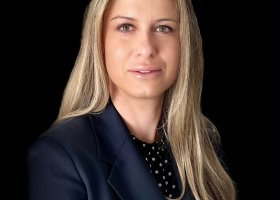
Some people are apprehensive about participating in improv comedy because of its unscripted format that requires quick thinking to play off unpredictable ideas presented by others on stage or in the audience. But Northern Michigan University assistant professor Peter Felsman is the lead author of a published study providing the first evidence that improv training can significantly reduce a common trait of social anxiety and depression: discomfort with uncertainty.
Felsman (left) doing improv with a house team called Brenda at Pointless Brewery & Theatre in Ann Arbor, which is now closed.

Researchers Assess Animal Model of Mental Illness

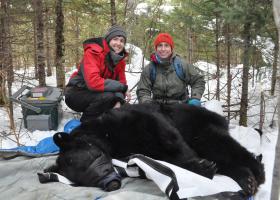
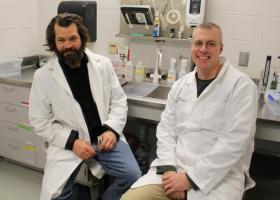
A chance discovery of unexpected behavioral changes in genetically modified mice prompted two Northern Michigan University researchers to embark on an interdisciplinary project. If their collaboration reveals the mice more closely replicate mental illness in humans than existing animal models, it could lead to increased understanding of human psychiatric disorders such as schizophrenia and more effective drug treatments. Erich Ottem of Biology and Adam Prus of Psychological Science received a Northern PRIME grant to support their research.

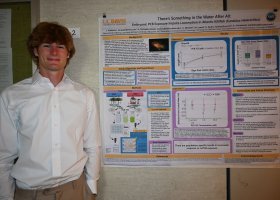
Ottem and Prus

NMU Team Surveys NPS Visitors About Climate Change

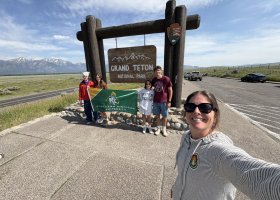
Northern Michigan University Professor Jes Thompson and some of her students recently wrapped up a series of stops at 20 U.S. national parks and 12 wildlife refuges, where they surveyed visitors on their perceptions of climate change in these natural areas. They are partnering with the National Park Service and the U.S. Fish and Wildlife Service to use the data collected to increase public awareness of climate change, foster meaningful conversations with visitors, and develop educational materials for future programs.
An NMU survey team at John Muir Woods National Monument (from left): Carson Piette, Mackenzie Geary, Rosie Mousseau, Sam Kearney and Jes Thompson

Weston Addition Enhances Research, Teaching

Northern Michigan University's recently completed addition to Weston Hall has increased available lab space, elevating the ability of Biology and Chemistry faculty to conduct high-quality research and train students in biomedical techniques. Highlights include two specialty teaching labs: a “world-class” Cell Culture Facility; and a state-of-the-art Microscopy Suite with dedicated rooms to house each of NMU's advanced microscopes, providing a central hub for research projects.
Undergraduate student Hosanna Brindle (left) and graduate student Mikaela Fairbanks in the LeBert Lab on the second floor of the Weston addition.

NMU Profs Among 2% of Highly Cited Scientists

Two Northern Michigan University professors—Maris Cinelli from Chemistry and Ryan Stock from Earth, Environmental and Geographical Sciences—are among the top 2% of highly cited scientists in the world, according to the most recent listing released by Stanford University and Elsevier, one of the largest publishing companies for scientific, technical and medical research. The list shows which scientists have had the biggest impact in their fields, based primarily on how often other scientists mention their work.
Maris Cinelli and Ryan Stock

Grad Publishes, Presents Paper on CPS Workers’ View of Child Advocacy Centers

Providing a coordinated response to child abuse that involves professionals from diverse fields has the potential to improve outcomes for children and advance justice. This multidisciplinary team model is implemented through child advocacy centers, and has been widely adopted to facilitate such collaboration.
NMU academic logo

NMU Alumna, Faculty Coauthor Published Wildebeest Study

The largest remaining migratory population of brindled wildebeest in southern Africa serves as a cornerstone prey species for large predators. Yet it has been understudied because of its remote location in the Greater Liuwa Ecosystem in western Zambia and Angola. Northern Michigan University alumna Steph Szarmach, along with Biology faculty members Alec Lindsay and Katherine Teeter, worked with collaborators in Zambia to explore the wildebeest's genetic diversity and demographic history. They are among the coauthors of a recently published paper on the study's findings.
Steph Szarmach in Zambia at Mosi-oa-Tunya National Park (Victoria Falls) during her "Zambassadors" field studies course through NMU