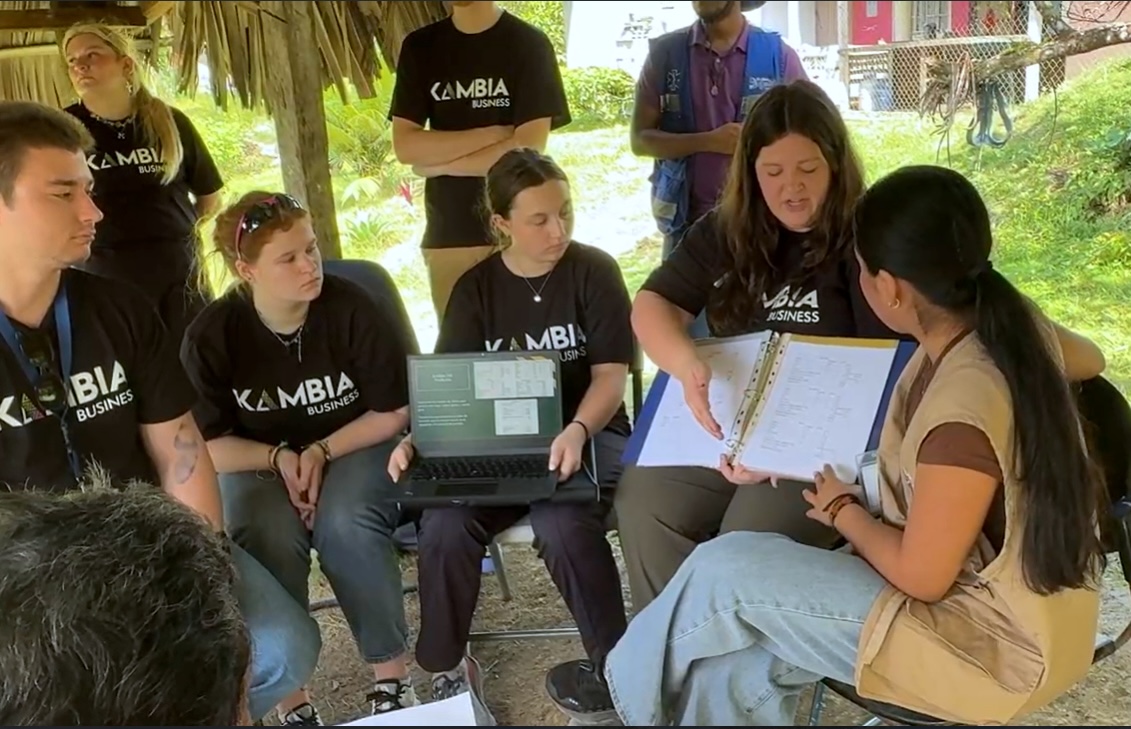
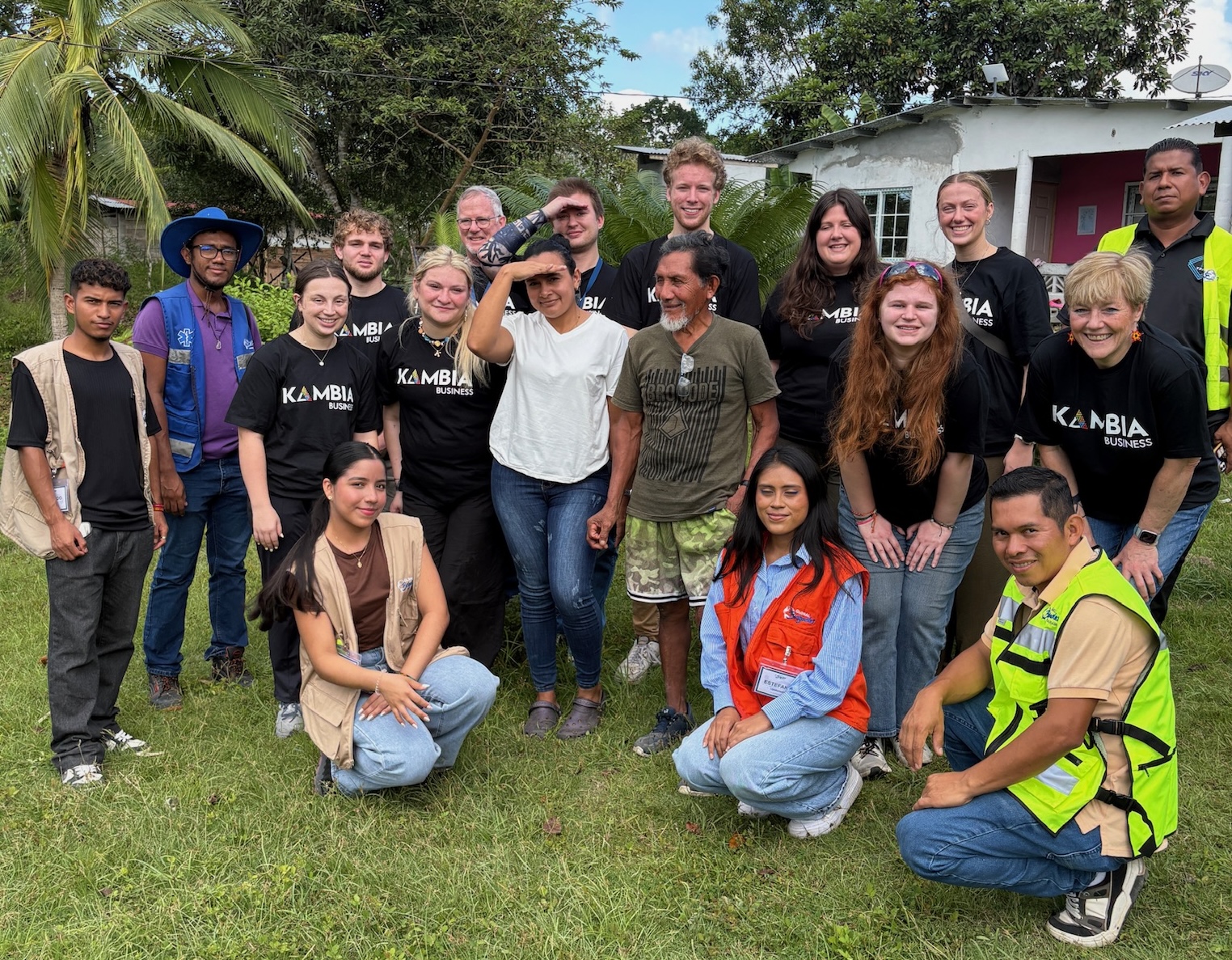
Northern Michigan University College of Business students participated in a January short-term study-abroad experience in Panama, where they worked alongside rural and Indigenous entrepreneurs to strengthen and grow local businesses.
Eight students made the trip as part of NMU's global social entrepreneurship class. They worked with entrepreneurs who often lacked access to formal education, digital tools or financial software.
One group partnered with Jimmy Gonzalez, a 72-year-old baker who owns Madu Nega, or “House of Bread.” Entrepreneurship major Brooke Kluz was among the students who worked directly with Gonzalez to help him prepare for future growth. He sells his bread in eight local stores and wants to expand, but to do that he needs a new permit and renovations.
“We created a step-by-step guide for the permit process, built an investment plan, organized his finances into a simple income and expense system, designed product labels and even created a succession plan so his 13-year-old grandson can eventually take over,” she said. “Working through translation and navigating a language barrier added an entirely new dimension to consulting, but knowing that what we created will actually be used is incredibly rewarding. This was one of the most meaningful experiences of my college career.”
“Jimmy had incredible knowledge and work ethic, but none of it was written down,” said College of Business faculty member Corinne Bodeman, who co-led the group with colleague Brian Zinser. “He was never taught to write. Our students sat down with him and documented every recipe, supplier and business contact in Spanish, organizing it all into a waterproof folder so it can be passed on to the next generation. That's economic development. It's not flashy, but it's powerful. It's about self-sufficiency.”
Student Janelle Harris's group worked with another client named Aida, who runs SubliAlejandr, a sublimation business that creates personalized gifts such as water bottles, shirts and mugs for a variety of events. Aida needed help with her marketing, financials and ways to grow her business.
“We worked with her to deliver the materials she would utilize and would also benefit her the most,” Harris said. “We presented her with four final deliverables: a physical financial tracker for her to calculate her month-to-month expenses and revenue; marketing supplies that are editable so that she can post on social media or print flyers; a variety of growth opportunities and new markets she can explore; and potential embroidery machines that will help expand her product mix and advice on how she can save for them. This was an incredible experiential learning opportunity to apply everything we had learned in classes to the real world.”
Sergiy Blackwood said working with real clients in Panama was valuable because it pushed him and fellow students out of the classroom mindset very quickly. Instead of working on hypothetical cases or learning concepts without being able to actually apply them, they were sitting across from real business owners who depended on what they were recommending.
“Being physically present made it much easier to understand our clients' abilities and their full situation, which forced us to slow down, ask better questions and really think through what would actually be useful for them,” Blackwood added. “I was struck by how resourceful and hardworking the people we worked with were, and how much pride and ownership they took in running their businesses despite having far fewer resources than we're used to. Another big factor that made me feel personally connected to the work was thinking about the generational impact this could have on these business owners and their families.”
Beyond consulting, students visited an Indigenous community, where they learned about cultural traditions and participated in activities such as painting and dancing. They also spent time exploring the capital city and Panama Canal.
“Seeing the contrast between rural poverty and the metropolitan wealth of Panama City was a huge eye-opener,” Bodeman said. “Students walked away with a deeper appreciation for access to education, technology and opportunity, and for the work ethic of people who are building businesses out of necessity to support their families.”
Kluz said her favorite free-time experience was the Monkey Island boat tour.
“We visited several islands and saw wildlife including monkeys, sloths, lizards and birds. It was a fun and memorable way to unwind with the group after working so hard for our clients, and served as a perfect balance to the professional aspects of the trip.”
In reflecting on the trip, Blackwood said, "Overall, this was the most meaningful learning experience I've had at NMU. It reinforced how important hands-on, real-world work is when you're learning business Even when also looking outside of my NMU experiences, I'd go so far as saying this was one of the best weeks of my entire life.”